
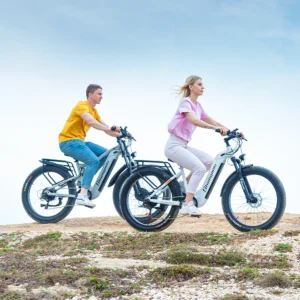
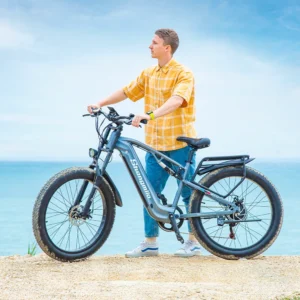
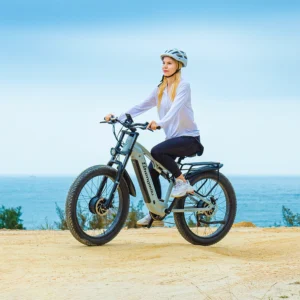


In Australia, electric bikes have gained immense popularity due to their convenience, eco-friendliness, and unique riding experience. However, while enjoying the speed and thrill of riding, safety is paramount. The braking system serves as the first line of defense for rider safety. Today, we’ll dive deep into the braking systems of electric bikes, focusing on disc brakes—specifically hydraulic and mechanical disc brakes—while also highlighting Shengmilo’s electric bike models.
1. In-Depth Analysis of Disc Brake Types
(1) Comparison of Hydraulic and Mechanical Disc Brakes
Braking Power and Feel
- Hydraulic Brakes: Utilizing a precise hydraulic system, hydraulic brakes provide powerful and highly controllable stopping power. When the rider squeezes the brake lever, the brake fluid efficiently and evenly transmits pressure to the calipers, ensuring a smooth and linear braking response. For example, the Shengmilo S600 electric bike excels in complex terrains such as downhill mountain trails or high-speed rides. Riders can apply minimal force to the brake lever for precise braking control, resulting in a smooth and reliable deceleration.
- Mechanical Disc Brakes: Mechanical disc brakes operate through a brake cable, making them less efficient in transferring braking force. In emergency braking situations, riders often need to exert more force on the brake lever to achieve stopping power comparable to hydraulic brakes. For instance, with the Shengmilo MX05, high-speed braking requires more effort, and the braking force may be less precise, sometimes leading to overly harsh or insufficient braking.
Cost and Affordability
Hydraulic Brakes: Due to their complex structure, hydraulic brakes incorporate high-precision hydraulic components, sealed brake lines, and specialized brake fluid, increasing manufacturing costs. This makes electric bikes equipped with hydraulic brakes, such as the Shengmilo S700, more expensive. Additionally, maintenance and repairs can be costly, as issues like brake fluid leaks or damaged hydraulic components require specialized tools and expertise.
Mechanical Disc Brakes: Mechanical disc brakes are simpler in structure, relying on brake cables and mechanical calipers, eliminating the need for a hydraulic system. This significantly reduces manufacturing costs. Models like the Shengmilo MX06, which feature mechanical disc brakes, are more budget-friendly. Moreover, routine maintenance is easier; if the brake cable loosens or minor issues arise, riders can make adjustments themselves using basic tools, lowering maintenance costs and effort.
Stability and Durability
Hydraulic Brakes: With an excellent sealed design, hydraulic brakes prevent dust, mud, and water from interfering with the system, ensuring consistent and reliable braking performance in harsh environments. Additionally, high-quality brake rotors facilitate heat dissipation, preventing brake fade during prolonged braking. The Shengmilo S600, for example, performs reliably in Australia’s rainy urban streets or dusty off-road trails, maintaining consistent stopping power.
Mechanical Disc Brakes: Since mechanical disc brake cables are exposed, they are more susceptible to dust, rain, and wear, which can degrade braking performance over time. Continuous braking can also lead to heat buildup, reducing braking efficiency. The Shengmilo MX05 may experience decreased braking effectiveness with frequent braking.
(2) Hydraulic Brakes
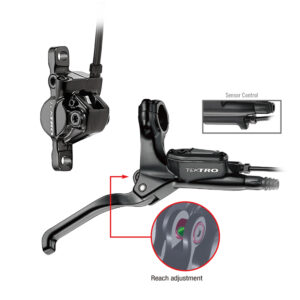
Hydraulic brakes play a crucial role in electric bike braking systems due to their outstanding stopping power. They operate on a hydraulic system filled with brake fluid. When the rider squeezes the brake lever, the fluid pressure is transmitted through sealed brake lines, activating the calipers. Because brake fluid is nearly incompressible, it efficiently transfers force to the calipers, clamping the brake rotors with strong friction, resulting in highly effective braking.
The Shengmilo S600 and S700 feature hydraulic brakes. In Australia’s diverse riding environments, whether navigating Sydney’s busy streets or tackling rugged mountain trails, these bikes’ hydraulic braking systems provide strong advantages. For instance, when riding downhill, precise braking is essential for safety. The S600’s hydraulic system allows riders to control braking force effortlessly, ensuring smooth and quick deceleration. Its excellent sealing prevents dirt and water from affecting performance, and advanced heat dissipation prevents brake fade during continuous braking.
(3) Mechanical Disc Brakes
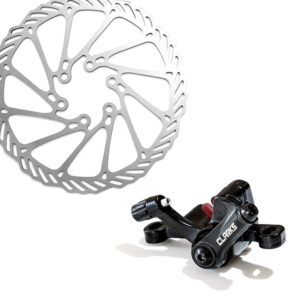
Mechanical disc brakes are a more basic braking system that uses brake cables to transmit braking force. When the rider pulls the brake lever, the cable moves the calipers, which push the brake pads against the rotor, generating stopping power.
The Shengmilo MX05 and MX06 feature mechanical disc brakes, making them great budget-friendly choices for riders who still want the benefits of disc brakes. Their lower cost makes them an attractive option, and their simple design allows for easy installation and adjustments. However, mechanical disc brakes have limitations. Since they rely on brake cables, some energy is lost during transmission, reducing braking efficiency compared to hydraulic systems. Additionally, mechanical brakes require more force for emergency stops and provide a firmer, less refined braking feel, which may lead to hand fatigue during long rides.
2. Overview of Other Brake Types
(1) V-Brakes
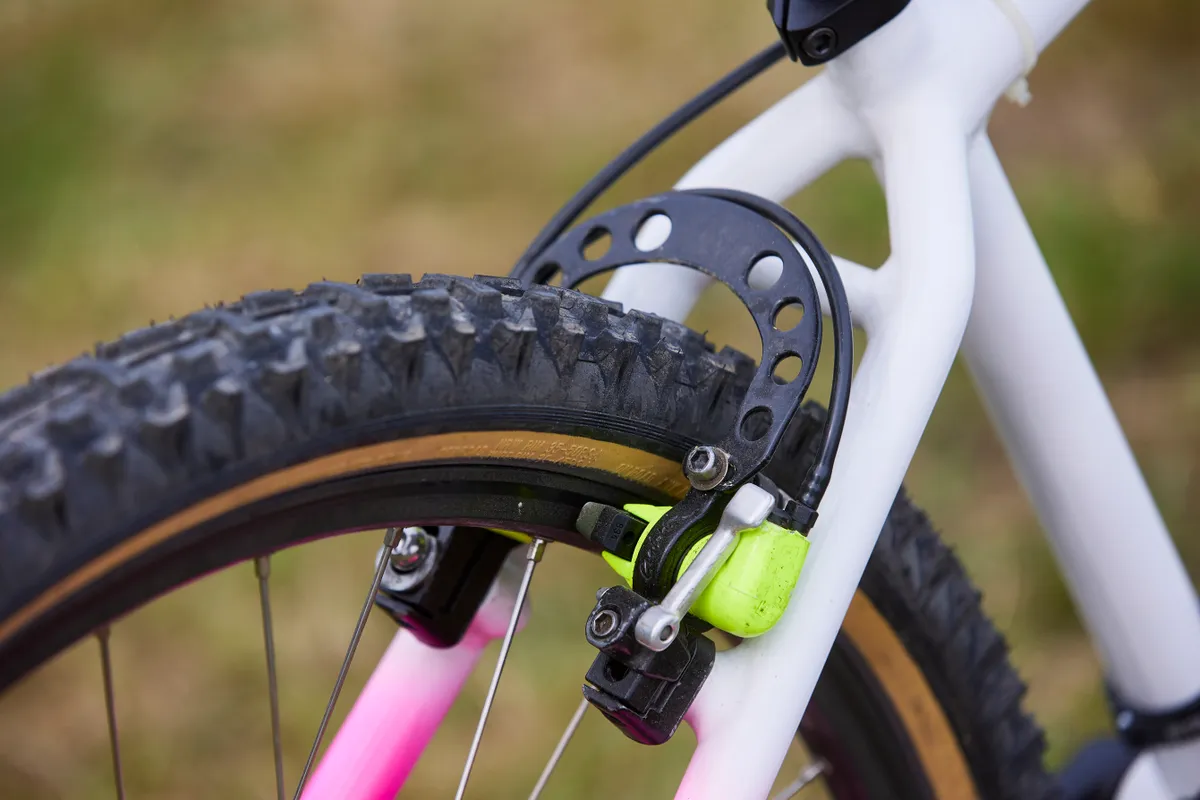
V-brakes use brake arms, cables, and brake pads that clamp onto the wheel rim to create friction. They are lightweight, affordable, and easy to maintain. However, they offer weaker braking power, especially at high speeds or under heavy loads, and wear down the wheel rim over time.
(2) Drum Brakes
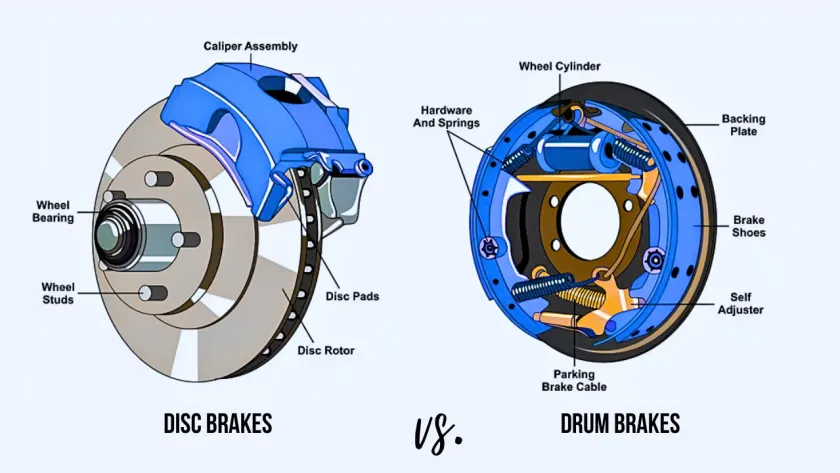
Common in small commuter e-bikes, drum brakes consist of brake drums, brake shoes, return springs, and a cam mechanism. When activated, the brake shoes press against the drum’s inner wall, creating friction to slow the bike. They are sealed, reducing exposure to dirt and water, but have poor heat dissipation, leading to brake fade with continuous use.
3. Key Factors Affecting Braking Performance
(1) Brake System Quality
High-quality components, including durable brake rotors, precise calipers, and strong brake cables, contribute to reliable stopping power. Shengmilo incorporates premium materials, such as high-strength alloy rotors with excellent heat dissipation, ensuring long-lasting and effective braking.
(2) Speed and Load
The faster the bike, the greater the kinetic energy, requiring more braking force. Heavier loads also increase braking difficulty. For instance, a fully loaded cargo e-bike requires significantly more braking distance than an empty one.
(3) Road Conditions
Braking efficiency is optimal on dry, paved roads. However, wet, gravel, or muddy roads reduce traction, increasing braking distance. Uphill and downhill rides also affect braking power, requiring stronger brakes to control descent and prevent rolling backward on inclines.
4. Brake System Maintenance Tips
(1) Regular Inspections
Before every ride, check the brake levers, cables, and calipers. For disc brakes, inspect rotor wear and brake pad thickness. For V-brakes and drum brakes, check pad wear and replace worn parts promptly.
(2) Cleaning and Lubrication
Keep the braking system clean, as dust and oil can affect braking efficiency. Wipe down brake components regularly and use dedicated disc brake cleaners for rotors and pads. Lubricate mechanical brake cables and moving parts to maintain smooth operation.
(3) Proper Braking Techniques
Avoid abrupt braking; apply brakes gradually to slow down before increasing force. Distribute braking force effectively, with 30–40% on the front and 60–70% on the rear, to prevent front-end dips or rear-wheel skidding.


Conclusion
Understanding different braking systems, including hydraulic and mechanical disc brakes, is essential for safe riding. Factors like braking quality, speed, road conditions, and proper maintenance all contribute to braking performance. Whether riding a Shengmilo electric bike or another brand, prioritizing safety ensures a smooth and enjoyable riding experience.
Contact Us: 24-hour Online Customer Service
support@shengmilo.com.au
Take Action Now and Upgrade Your Riding Experience! [Click to Enter Shengmilo Electric Bikes Section]
Learn more about Shengmilo: www.shengmilo.com.au
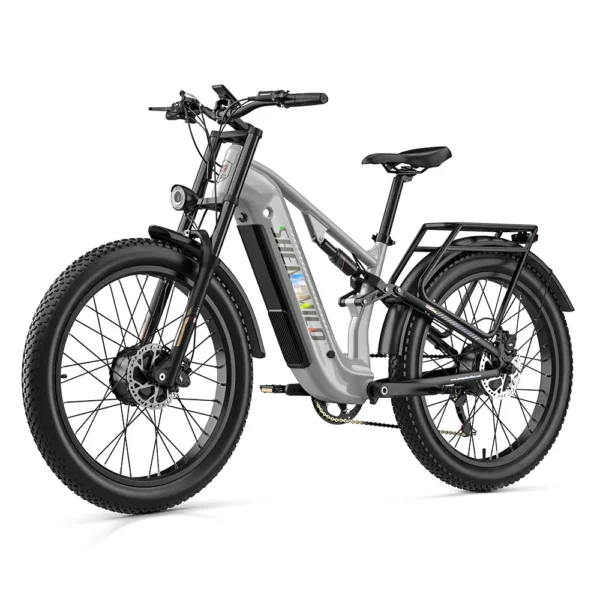
Shengmilo MX06
$1,949.00 – $2,499.00Price range: $1,949.00 through $2,499.00
Shengmilo MX05
$1,949.00 – $2,499.00Price range: $1,949.00 through $2,499.00
Shengmilo S700
$2,399.00 – $2,899.00Price range: $2,399.00 through $2,899.00
Shengmilo S600
$2,499.00 – $2,999.00Price range: $2,499.00 through $2,999.00